Within UFO Fiction
Why Alien Abduction Stories Feel So Familiar
Alien abduction narratives show how fear, memory, medicine, dreams, and screen culture can converge around one powerful motif.
On this page
- Bedroom visitors and missing time
- Medical imagery and examination scenes
- How fiction standardized the abduction script
Page outline Jump by section
Introduction
Alien abduction stories feel familiar because they combine several recognisable images into one powerful script: the night-time bedroom visitor, the gap in memory, the bright craft or clinical room, the small grey beings, and the invasive medical examination. These motifs did not arise from science fiction alone, but science fiction helped make them legible. Once films, television, pulp magazines and UFO literature had supplied a shared visual language, later accounts could be told, remembered, investigated and dramatised through images many audiences already knew.
The clearest pattern is not simple copying from fiction. It is a feedback loop. Personal fear, sleep experiences, hypnosis, medical anxiety and cultural imagery all give people ways to organise ambiguous experiences into a story with a beginning, middle and end. The Betty and Barney Hill case gave the modern abduction narrative its most influential early shape; later researchers, sceptics, therapists, television dramas and films helped standardise the version now recognised almost instantly as “alien abduction”.[unh.edu]archives.unh.eduOpen source on unh.edu.
Bedroom visitors and missing time
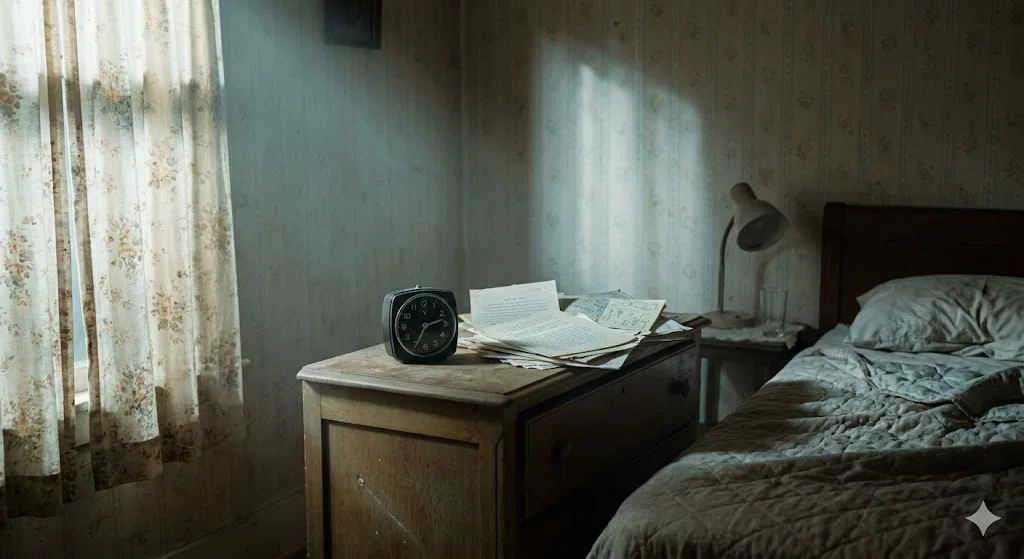
The abduction story usually begins not in deep space, but in an ordinary setting made suddenly unsafe: a car on a lonely road, a bedroom at night, a campsite, a field, or a house where the witness should be protected. That is one reason the motif became so durable. Unlike invasion science fiction, which imagines cities, armies and planetary crisis, abduction stories bring cosmic threat into the private body and the private room.
“Missing time” is central to this effect. In many abduction narratives, the person does not initially remember a full dramatic encounter. Instead, they notice a discontinuity: a journey took too long, a clock seems wrong, clothes are disturbed, or the person wakes with a sense that something has happened. Folklorist Thomas E. Bullard’s influential comparison of abduction reports identified a recurring sequence that includes capture, examination, communication, memory loss, return and aftermath, although not every account contains every stage.[Wikipedia]WikipediaNarrative of the abduction phenomenonNarrative of the abduction phenomenon
The Hill case made this structure culturally famous. Betty and Barney Hill reported a 1961 UFO encounter while driving through New Hampshire’s White Mountains; the University of New Hampshire archive describes them as becoming internationally known for saying they had been abducted by aliens, and its collection includes papers, correspondence, Betty’s dress and a bust of one of the beings as Betty described it.[UNH Archives]archives.unh.eduOpen source on unh.edu. The story became widely public through John G. Fuller’s 1966 book The Interrupted Journey and later through the 1975 television film The UFO Incident, which helped move abduction imagery from UFO subculture into mass screen culture.[Wikipedia]WikipediaBarney and Betty Hill incidentBarney and Betty Hill incident
Bedroom abductions later shifted the scene even closer to sleep. In these accounts, the witness may wake paralysed, sense a presence, see figures near the bed, or feel lifted, touched or watched. Psychology research gives this motif an important non-extraterrestrial mechanism: sleep paralysis can involve temporary inability to move at the edge of sleep, vivid hallucinations and a felt presence in the room. McNally and Clancy reported that ten people in one study who described alien abduction also described apparent sleep paralysis episodes, with hypnopompic hallucinations interpreted as alien beings.[PubMed]pubmed.ncbi.nlm.nih.govOpen source on nih.gov.
This does not mean every story has the same cause. It does show why abduction imagery fits so neatly around night-time terror. A person who wakes unable to move, feels watched, and struggles to explain a vivid experience may reach for the most available cultural script. In earlier periods, that script might have involved demons, spirits or fairies. In the late twentieth-century UFO environment, the script increasingly involved aliens, craft, beams and medical rooms.[Dr. Michael Heiser]drmsh.comDr. Michael Heiser Discussion Starters on Bullard's Supernatural KidnappingDr. Michael Heiser Discussion Starters on Bullard's Supernatural Kidnapping
Medical imagery and examination scenes
The most distinctive abduction image is not the flying saucer itself. It is the examination room. The witness is taken from ordinary life into a bright, controlled, clinical space where small beings examine, scan, restrain or sample the body. This is where science fiction, medicine and fear converge most sharply.
The scene is powerful because it turns modern medicine into alien ritual. Many abduction accounts include procedures focused on the head, skin, nervous system, reproductive organs, pregnancy, samples, implants or instruments. The body is treated less as a patient’s body than as a specimen. That difference matters: the terror is not simply pain, but helplessness under an unreadable intelligence. Summaries of abduction literature note that the “examination” phase commonly involves medical procedures performed without the experiencer’s consent, often with emphasis on sex and reproduction.[Wikipedia]WikipediaAlien abductionAlien abduction
The Hill narrative helped establish this imagery. Under hypnosis, the Hills described being taken aboard a craft and examined; later accounts of the case emphasised samples, bodily inspection, unusual beings and a clinical interior. The Harvard Gazette’s discussion of alien abduction memories gives a typical later version of the script: a person recalls being taken through a window into a spaceship, frightened in a medical examining room, and returned to bed.[Harvard Gazette]news.harvard.eduGazette Alien abduction claims examinedGazette Alien abduction claims examined
This imagery also reflects twentieth-century anxieties that science fiction had already explored. Hospitals, laboratories and military research sites became familiar settings for stories about secret knowledge and dehumanising technology. Abduction narratives compress those fears into a personal scene: the alien is not merely a visitor from another planet, but a doctor, scientist, interrogator and captor at once.
The medical scene also made abductions unusually adaptable for television and film. It offered strong visuals: white light, metal tables, masked or expressionless figures, immobile bodies, instruments and close-ups of eyes. These images could be repeated without needing elaborate space battles. The abduction story became a small, intimate science-fiction scene that could be staged in a bedroom, a corridor, a ship interior or a therapy session.
How fiction standardised the abduction script
Science fiction did not need to invent every abduction detail to shape the phenomenon. Its stronger role was standardisation. It supplied a shared look, rhythm and set of expectations: small humanoids, large eyes, silent control, telepathic communication, saucer interiors, laboratory-like rooms, beams of light and memory suppression.
One debated example is the resemblance between Barney Hill’s hypnotically recovered description of beings with large wraparound eyes and an episode of The Outer Limits. Martin Kottmeyer argued in 1990 that Barney’s description may have been influenced by “The Bellero Shield”, broadcast on 10 February 1964, shortly before Barney’s hypnosis session of 22 February 1964. The episode included an extraterrestrial with striking eyes, and sceptical writers have treated the timing as evidence that television imagery may have entered memory.[skepticalinquirer.org]skepticalinquirer.orgThe Eyes that SpokeThe Eyes that Spoke
The argument is suggestive rather than conclusive. Betty Hill reportedly denied knowing the episode, and cultural influence is rarely provable in a single case. Folklorist Thomas Bullard also cautioned against reducing abduction accounts to Hollywood copying, arguing that the abduction literature does not simply reproduce the full range of screen monsters and robots.[Wikipedia]WikipediaBetty y Barney HillBetty y Barney Hill The more careful conclusion is that screen culture formed part of the surrounding image bank from which memories, dreams, investigators and audiences could draw.
Older pulp and comic imagery also matters. Sceptical and folkloric discussions have pointed to pre-Hill science fiction scenes involving capture, alien rooms and bodies on tables, including examples from early twentieth-century comics and magazine art. Such parallels do not prove direct borrowing by witnesses, but they show that the abduction structure was already imaginable before it became a claimed lived experience.[Wikipedia]WikipediaNarrative of the abduction phenomenonNarrative of the abduction phenomenon
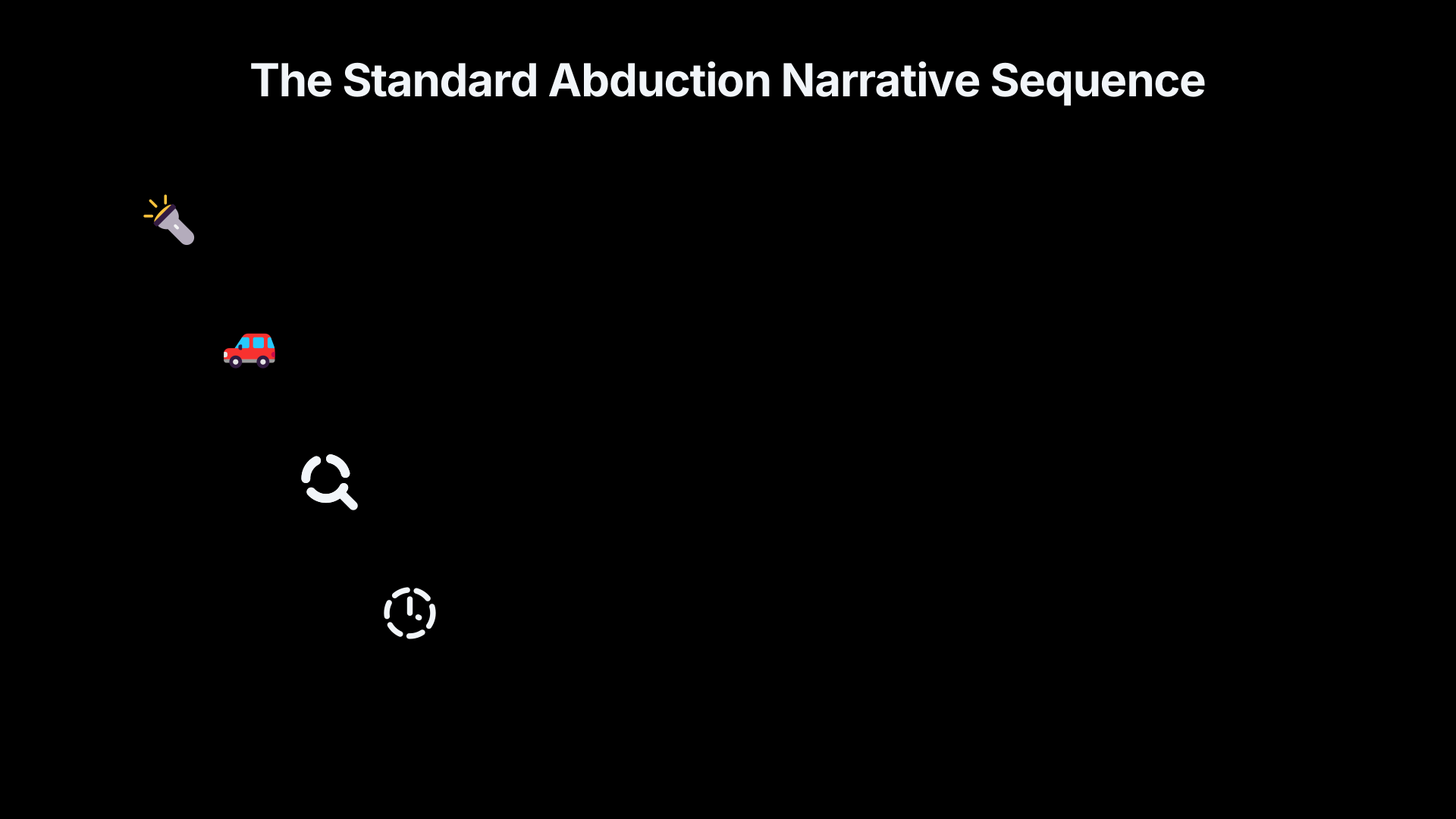
Once the script existed, repetition made it easier to recognise. A witness, therapist, journalist or television writer did not need to invent the whole story each time. The familiar sequence could be assembled from a small number of parts:
- Interruption: a strange light, sound, presence or paralysis breaks ordinary reality.
- Removal: the person is taken from a car, bed or landscape into another space.
- Examination: the body is inspected, sampled or modified.
- Communication: the beings give warnings, ask questions or communicate without ordinary speech.
- Return: the person is placed back, often with missing time or confused memory.
- Aftermath: the witness seeks explanation through hypnosis, UFO groups, therapy, media or private belief.
This structure made abduction stories unusually portable. They could appear as sincere testimony, tabloid story, horror scene, science-fiction episode, therapy narrative, sceptical case study or internet confession while still remaining recognisably the same kind of tale.

Why the aliens became small, grey and expressionless
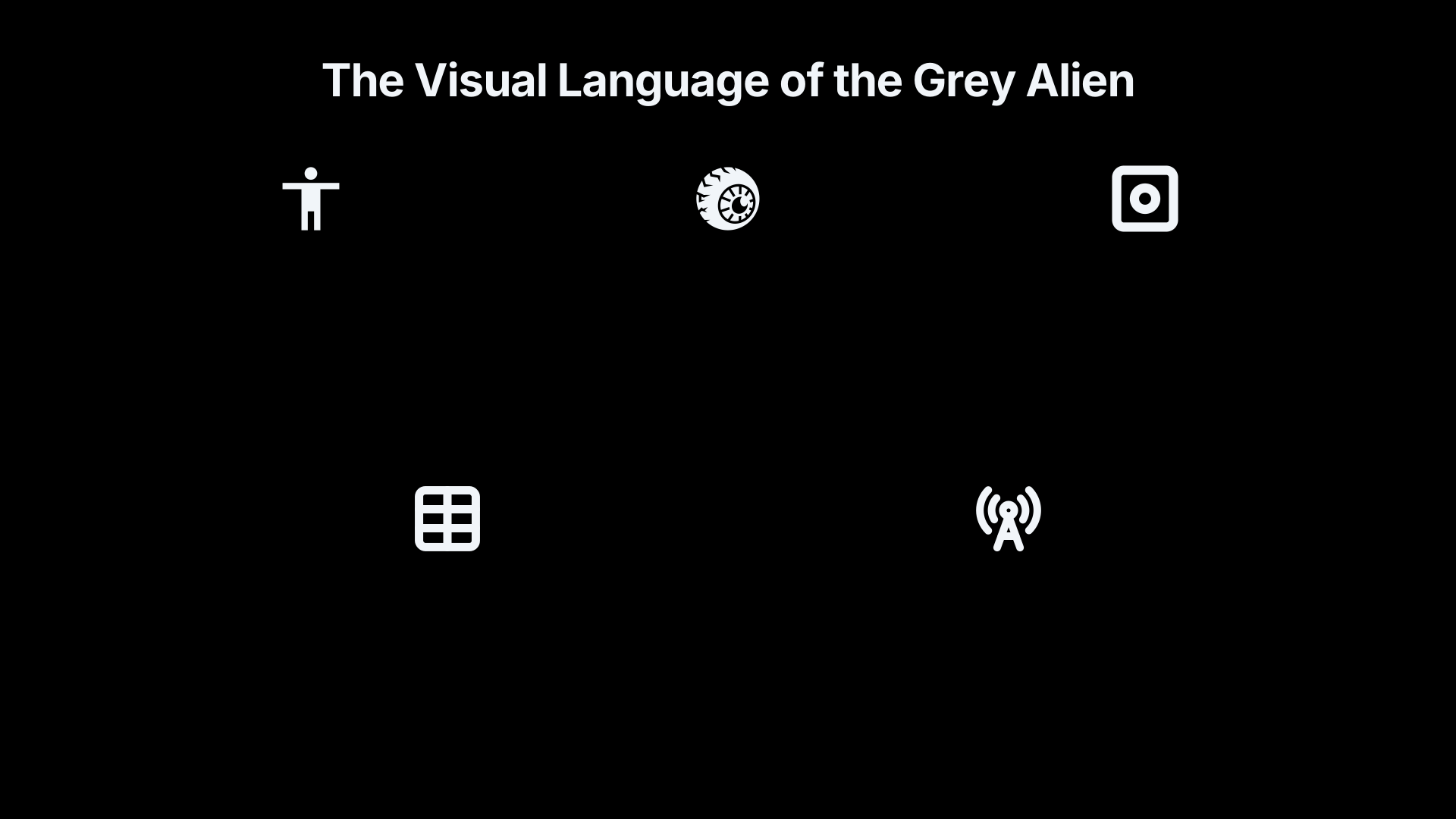
The “Grey” alien became the visual shorthand for abduction because it solved a storytelling problem. A monster can be frightening, but a small, smooth, unreadable being is more disturbing in a clinical abduction scene. It looks intelligent, emotionless and physically weak yet somehow in control. That combination suits a narrative based less on combat than on paralysis, observation and bodily vulnerability.
The Hill case is often treated as a key step in popularising this form, although the exact development of the Grey image is contested. Later accounts and media depictions emphasised large eyes, small bodies, smooth heads and minimal facial features. The University of New Hampshire’s material on the Hill collection notes that Betty commissioned a bust of one of the aliens, and a related archival analysis describes the Hills’ commissioned visual depictions as contributing to an image now closely associated with the word “alien”.[Library | University of New Hampshire]library.unh.eduLibrary | University of New Hampshire Using the Betty & Barney Hill CollectionLibrary | University of New Hampshire Using the Betty & Barney Hill Collection
The large eyes are especially important. Eyes carry emotion, intention and threat. In abduction imagery, they often replace speech: the alien stares, commands, paralyses or communicates. Kottmeyer’s “Eyes that Spoke” essay focused on this motif, linking it to the Hill case and to wider science-fiction imagery of alien eyes.[skepticalinquirer.org]skepticalinquirer.orgThe Eyes that SpokeThe Eyes that Spoke
The Grey also works because it is almost human but not quite. It has a head, eyes, torso and limbs, so viewers recognise agency and intelligence. Yet its face is too smooth, its eyes too large, and its body too slight. That near-human design fits the psychological atmosphere of abduction stories: the experience is intimate, bodily and personal, but the beings remain unreadable.
Hypnosis, memory and the making of a coherent story
Many famous abduction accounts are not presented as fully remembered events from the start. They often emerge through attempts to explain fragments: nightmares, anxiety, unusual marks, missing time, or a feeling that something hidden must be recovered. Hypnosis became important in UFO abduction culture because it promised access to concealed memory. It also became controversial because memory researchers have shown that suggestion, expectation and imagination can shape what people later experience as memory.
Harvard research on people reporting recovered memories of alien abduction found increased vulnerability to memory distortion in such groups, and the Harvard Gazette reported that abduction memories could provoke physiological reactions similar to those seen when people recall recognised traumatic experiences. That finding is subtle: it suggests the memories can be emotionally and bodily real to the person, without proving that the events happened as described.[Gruber Pep Lab]gruberpeplab.com11.2 Clancy200211.2 Clancy2002
Susan Clancy’s work is important here because it treats abductees neither as simple hoaxers nor as automatically accurate witnesses. Her account emphasises a combination of sleep experiences, cultural scripts, suggestibility, imagination and the human desire for meaningful explanation. A Wired interview about her book summarised her position bluntly: abductees are not “nuts”, but ordinary people can come to hold extraordinary beliefs through normal psychological mechanisms.[WIRED]wired.comRegret Is Alien to UFO AbducteesRegret Is Alien to UFO Abductees
This is where science fiction imagery becomes active rather than decorative. A person trying to understand an ambiguous experience needs content: Who was in the room? Why could I not move? Why was I afraid? Why do I feel changed? A culture saturated with alien abduction imagery offers answers. The result can be a narrative that feels discovered, not invented, because its emotional core is genuine even when its imagery is culturally supplied.
The abduction story as a late twentieth-century screen memory
Alien abductions became one of the most recognisable branches of UFO culture because they translated the distant UFO into a close human drama. A light in the sky may remain ambiguous, but an abduction story has characters, setting, threat, revelation and aftermath. It can be retold as testimony, investigated as a case, adapted as fiction and debated as psychology.
Science fiction imagery did not act on an empty mind. It met existing fears: fear of medical violation, fear of lost control, fear of sleep, fear of surveillance, fear of scientific authority, fear of being disbelieved, and fear that the body itself may hold hidden evidence. The abduction script gave those fears a modern costume.
Official and scientific UAP discussions remain separate from abduction claims. NASA’s 2023 independent study report stated that there was no conclusive peer-reviewed evidence for an extraterrestrial origin of UAP, and NASA’s public FAQ says there are no data supporting UAP as evidence of alien technologies. AARO, the US defence office investigating UAP, likewise says it has found no evidence of extraterrestrial technology.[NASA Science]science.nasa.govScience Independent Study Team ReportScience Independent Study Team Report
That evidence gap does not make abduction stories culturally unimportant. It makes them important in a different way. They show how UFO culture and science fiction can merge around a motif strong enough to organise dreams, memories, media images and personal testimony. The abduction story endures because it is not only about aliens. It is about the modern body under examination, the bedroom made unsafe, and the uneasy possibility that the images we use to explain fear may also help shape what fear becomes.
Amazon book picks
Further Reading
Books and field guides related to Why Alien Abduction Stories Feel So Familiar. Use these as the next step if you want deeper reading beyond the article.
eBay marketplace picks
Marketplace Samples
Example marketplace items related to this page. Use the search link to explore similar finds on eBay.


Endnotes
1.
Source: archives.unh.edu
Link:https://archives.unh.edu/repositories/3/resources/107
2.
Source: Wikipedia
Title: Narrative of the abduction phenomenon
Link:https://en.wikipedia.org/wiki/Narrative_of_the_abduction_phenomenon
3.
Source: library.unh.edu
Title: Library | University of New Hampshire Using the Betty & Barney Hill Collection
Link:https://library.unh.edu/find/archives/collections/using-materials/using-betty-barney-hill-collection
4.
Source: Wikipedia
Title: Barney and Betty Hill incident
Link:https://en.wikipedia.org/wiki/Barney_and_Betty_Hill_incident
5.
Source: Wikipedia
Title: Alien abduction
Link:https://en.wikipedia.org/wiki/Alien_abduction
6.
Source: news.harvard.edu
Title: Gazette Alien abduction claims examined
Link:https://news.harvard.edu/gazette/story/2003/02/alien-abduction-claims-examined-2/
7.
Source: skepticalinquirer.org
Title: The Eyes that Spoke
Link:https://skepticalinquirer.org/newsletter/eyes-that-spoke/
8.
Source: Wikipedia
Title: The Bellero Shield
Link:https://en.wikipedia.org/wiki/The_Bellero_Shield
9.
Source: Wikipedia
Title: Betty y Barney Hill
Link:https://es.wikipedia.org/wiki/Betty_y_Barney_Hill
10.
Source: wired.com
Title: Regret Is Alien to UFO Abductees
Link:https://www.wired.com/2005/10/regret-is-alien-to-ufo-abductees
11.
Source: science.nasa.gov
Title: Science Independent Study Team Report
Link:https://science.nasa.gov/wp-content/uploads/2023/09/uap-independent-study-team-final-report.pdf
12.
Source: science.nasa.gov
Link:https://science.nasa.gov/uap/faqs/
13.
Source: aaro.mil
Link:https://www.aaro.mil/
14.
Source: aaro.mil
Link:https://www.aaro.mil/UAP-Cases/Official-UAP-Imagery/
15.
Source: Wikipedia
Title: NASA [Unidentified]({{ ‘unidentified/’ | relative_url }}) Anomalous Phenomena Independent Study Team
Link:https://en.wikipedia.org/wiki/NASA_Unidentified_Anomalous_Phenomena_Independent_Study_Team
16.
Source: Wikipedia
Title: All domain Anomaly Resolution Office
Link:https://en.wikipedia.org/wiki/All-domain_Anomaly_Resolution_Office
17.
Source: library.unh.edu
Title: betty barney hill papers 1961 2006
18.
Source: science.nasa.gov
Link:https://science.nasa.gov/uap/
19.
Source: space.com
Title: pentagon ufo office aaro historical report no emprical evidence [alien technology]({{ ‘tech-magic/’ | relative_url }})
Link:https://www.space.com/pentagon-ufo-office-aaro-historical-report-no-emprical-evidence-alien-technology
20.
Source: space.com
Title: nasa ufo uap study team first results revealed
Link:https://www.space.com/nasa-ufo-uap-study-team-first-results-revealed
21.
Source: dash.harvard.edu
Title: alien abduction
Link:https://dash.harvard.edu/bitstream/handle/1/8862147/alien_abduction.pdf
22.
Source: news.harvard.edu
Title: alien abduction claims explained
Link:https://news.harvard.edu/gazette/story/2005/09/alien-abduction-claims-explained/
23.
Source: news.harvard.edu
Title: starship memories 2
Link:https://news.harvard.edu/gazette/story/2002/10/starship-memories-2/
24.
Source: skepticalinquirer.org
Title: abductive reasoning
Link:https://skepticalinquirer.org/exclusive/abductive-reasoning/
25.
Source: pubmed.ncbi.nlm.nih.gov
Link:https://pubmed.ncbi.nlm.nih.gov/15881271/
26.
Source: drmsh.com
Title: Dr. Michael Heiser Discussion Starters on Bullard’s Supernatural Kidnapping
Link:https://drmsh.com/discussion-starters-on-bullards-supernatural-kidnapping-folklore-article/
27.
Source: gruberpeplab.com
Title: 11.2 Clancy2002
Link:https://www.gruberpeplab.com/teaching/psych3303_spring2018/documents/11.2_Clancy2002.pdf
28.
Source: theouterlimits.fandom.com
Title: The Bellero Shield
Link:https://theouterlimits.fandom.com/wiki/The_Bellero_Shield
29.
Source: facebook.com
Link:https://www.facebook.com/groups/902349343110685/posts/9249793728366163/
30.
Source: pubmed.ncbi.nlm.nih.gov
Link:https://pubmed.ncbi.nlm.nih.gov/16571535/
Additional References
31.
Source: science.org
Link:https://www.science.org/doi/10.1126/science.1121309
32.
Source: youtube.com
Title: The Alien Abduction Phenomenon of the Mid-20th Century | STUFF YOU SHOULD KNOW
Link:https://www.youtube.com/watch?v=9wQVN0atWLw
Source snippet
The Last Angel Of History | 4:3 Feature Films...
33.
Source: youtube.com
Title: UFO’s Are Real | FULL MOVIE | Aliens Sci-Fi Documentary
Link:https://www.youtube.com/watch?v=oM9WfDBRNcg
Source snippet
The Alien Abduction Phenomenon of the Mid-20th Century | STUFF YOU SHOULD KNOW...
34.
Source: youtube.com
Title: The Abduction of Betty & Barney Hill
Link:https://www.youtube.com/watch?v=V3MjsfuLGYw
Source snippet
UFO's Are Real | FULL MOVIE | Aliens Sci-Fi Documentary...
35.
Source: cia.gov
Link:https://www.cia.gov/readingroom/docs/CIA-RDP81R00560R000100010003-8.pdf
36.
Source: researchgate.net
Link:https://www.researchgate.net/publication/232553365_Alien_abduction_experiences
37.
Source: researchgate.net
Link:https://www.researchgate.net/publication/374373111_UFOs_and_Unidentified_Anomalous_Phenomena_The_NASA_report_1492023_has_found_no_evidence_to_suggest_that_UAPs_are_extraterrestrial_in_origin
38.
Source: outdoors.org
Link:https://www.outdoors.org/resources/amc-outdoors/history/the-story-of-betty-and-barney-hill/
39.
Source: sites.usnh.edu
Link:https://sites.usnh.edu/archivalanalysis/hill-collection-overview/
40.
Source: dokumen.pub
Link:https://dokumen.pub/captured-the-betty-and-barney-hill-ufo-experience-the-true-story-of-the-worlds-first-documented-alien-abduction-9781564149718-1564149714.html
Topic Tree
Follow this branch
Parent topic
UFO FictionRelated pages 29
- Bedroom Terror Why Abductions Moved Into the Bedroom
- Grey Aliens Why Abductors Became Small Grey Aliens
- Hill Case How One Case Made Missing Time Famous
- Story Scripts How Fragments Became Full Abduction Stories
- The Medical Examination Room Why Alien Abductions Look Like Examinations
- +1 more in sidebar